Disney’s Earnings Signal a Return to Box Office and Theme Parks as Dual Profit Engines

- Experiences revenue: >$10B in the quarter (record for the segment)
- Studios: >$6.5B 2025 global box office, third-biggest year ever for Disney
- Franchise hits: 3 films over $1B in 2025 (Avatar: Fire and Ash, Zootopia 2, Lilo & Stitch)
- Zootopia 2: $1.7B+ box office, highest-grossing animated film ever, top-10 film all-time
- Streaming: SVOD subscription revenue +13% YoY; segment now profitable with double‑digit margin target
- ESPN: best college football season on ABC since 2006; MNF’s 2nd-highest viewership in 20 years
- Sports: subscriber erosion in the low single digits vs prior 7–8% declines
- Parks: Walt Disney World bookings up 5% for the year, skewed to back half
- 2026 content slate: The Devil Wears Prada 2, The Mandalorian and Grogu, Toy Story 5, live-action Moana, Avengers: Doomsday
- Parks: management flags softer visibility on international visitation
- Legacy TV: continued, if moderating, subscriber declines in sports bundle
A studio supercycle that spills into parks and streaming
Robert Iger opened Disney’s fiscal 2026 with the confidence of a chief executive who believes the hard part is mostly behind him. Three years after his return, the company is presenting investors with a more balanced narrative: the once-maligned parks division now posting record quarters, the studios back at the top of the global box office, and a streaming arm that has finally shifted from cash sink to operating engine.
The most striking datapoint came from Disney’s film studios. In calendar 2025, the company generated more than $6.5 billion at the global box office, its third-largest haul ever and its ninth year out of the past ten as the number one studio worldwide. The creative flywheel that many on Wall Street wondered if Disney had broken in the pandemic years is back in conspicuously working order.
Three titles did much of the heavy lifting. Avatar: Fire and Ash, Zootopia 2 and a new Lilo & Stitch each crossed the billion‑dollar mark, together forming a $3 billion spine to the slate. Zootopia 2, in particular, has become the latest emblem of the Disney machine at full extension: more than $1.7 billion in ticket sales, now the highest‑grossing animated film in history and one of the ten biggest films of all time.
That success is already being recycled through Disney’s ecosystem. Iger noted the “enormous” lift to Disney+ engagement from both Zootopia 2 and Avatar: Fire and Ash, with prior franchise entries approaching a million first streams and “hundreds of millions” of new hours consumed. In China, Zootopia 2 is now the highest‑grossing foreign film ever. At Shanghai Disneyland, the Zootopia land has become one of the park’s most powerful magnets, with a notably high share of visitors coming primarily for that single themed area.
For investors, the message is less about any one film and more about the durability of the model. Of the roughly 60 films that have reached $1 billion at the global box office, 37 have come from Disney’s studios – “four times more than any other studio,” Iger reminded listeners. That reservoir of proven brands underpins not only film P&Ls, but the value of Disney+ and the case for heavier capital deployment in parks and cruises.
The upcoming slate is designed to keep that cycle spinning. On the schedule for the current fiscal year are The Devil Wears Prada 2, The Mandalorian and Grogu, Toy Story 5, a live‑action Moana and Avengers: Doomsday. Hugh Johnston, the chief financial officer, framed these not just as box office drivers but as future fuel for consumer products and park attractions, with some of the new tentpoles timed to hit Disney+ before year‑end.
Experiences: from problem child to capital magnet
If the studio figures confirm Disney still knows how to mint global hits, the experiences segment shows what happens when that IP is turned into concrete, steel and high‑margin hotel inventory.
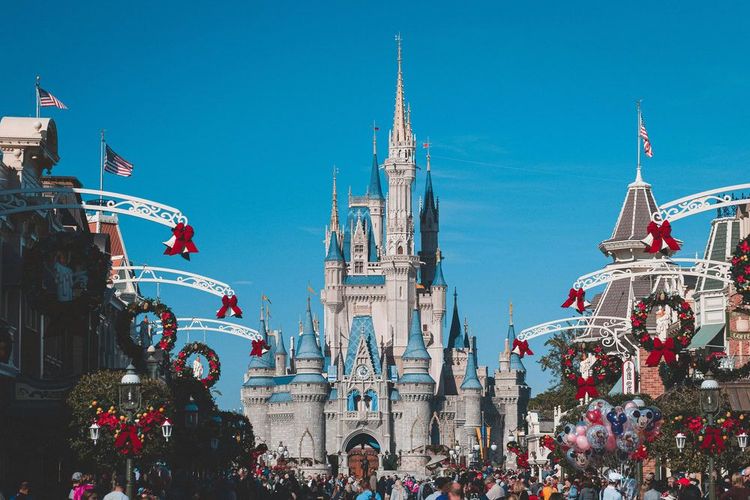
For the first time, quarterly revenue in experiences – spanning theme parks, resorts and cruise lines – topped $10 billion. Walt Disney World, which had been under particular scrutiny last year as attendance softened, “had a very good quarter,” Johnston said, helped by easier comparisons after last year’s hurricane but also by “strong attendance performance as well as strong pricing performance.”
Bookings for the full year at the Florida resort are up 5%, weighted towards the back half of the fiscal year. Management was candid that they have less line‑of‑sight on international visitors – who are more likely to stay off‑property – and have therefore shifted marketing and promotional resources towards the domestic guest. The strategy appears, for now, to be cushioning any softness from overseas tourism.
The physical footprint is still expanding. Iger said Disney has “expansion projects underway at every one of our theme parks,” positioning the portfolio for another leg of growth. Next month marks the opening of the “world of Frozen” at the reimagined Disney Adventure World at Disneyland Paris, which will nearly double the size of the resort’s second gate. In Shanghai, the Zootopia land is already described as “enormous in terms of both its size and its value,” and a key reason guests make the trip.
On the water, Disney Cruise Line is in its own build‑out phase. The newly launched Disney Destiny has drawn “outstanding reviews,” and the Disney Adventure – the company’s first ship to be home‑ported in Asia – is set to debut next month, extending the parks‑and‑cruises ecosystem into new demographic and geographic territory.
Iger reminded investors that when he first took the helm in 2005, the parks’ return on invested capital was “not impressive… and actually not acceptable,” with little expansion underway. The acquisitions of Pixar, Marvel, Lucasfilm and Fox shifted that calculus by providing a pipeline of characters and worlds that could anchor multi‑billion‑dollar physical projects. Now, with active or planned expansion “in every place we operate” and Iger talking up the potential of new destinations such as Abu Dhabi, the parks and resorts operation has become the company’s most avid consumer of capital and, for now, its primary generator of earnings.
The longer‑term question for investors is whether Disney will remain, in profit terms, predominantly a parks company. Iger demurred from precise forecasts but said he expects “healthy competition” between experiences and entertainment for the mantle of top profit contributor over the next decade, given both the scale of park investments and the improving trajectory of streaming and film.
Streaming: from red ink to operating leverage
If the earnings call had a subtext, it was that Disney is trying to move its streaming narrative from existential angst to incremental optimisation.
Three years ago, the direct‑to‑consumer business was losing roughly $1 billion a quarter. For last year, Disney disclosed streaming losses of nearly $4 billion. Now, the segment has swung to profitability, and management is targeting a 10% margin this year after delivering around 5% last year.
In the latest quarter, subscription video‑on‑demand revenue grew 13%, driven by pricing, subscriber growth in both North America and international markets, and the increasing uptake of bundles. Johnston said the “duo, trio and max” bundles are all “doing well and driving both engagement and revenue realization.” Churn, a chronic headache in the early Disney+ years, has come down noticeably among bundled customers; the partial integration of Hulu into Disney+ has had the same effect.
Strategically, Iger argued that his early move to rewire the organisation around streaming has been vindicated. Shortly after returning as CEO, he put the streaming P&L under the same leaders who control film and television production – Alan Bergman and Dana Walden – ensuring that the executives deploying the largest content budgets also own the financial outcomes. The result, he said, is an operation that now “makes more than a billion dollars” and is “on a path to turning into a far better business.”
The next phase is about deepening engagement and smoothing the customer experience. Disney is working towards a fully unified app that will allow Disney+ and Hulu to function as a single environment – though customers will still be able to buy them separately – with ESPN bundled in more seamlessly. Iger expects the “one app” experience to roll out around the end of the calendar year.
On product, the company is layering in new formats. Among these is a push into short‑form and user‑generated video that brings Disney closer to the rhythms of platforms like YouTube and TikTok without trying to replicate them wholesale.
ESPN, the NFL and a new streaming frontier
Sports remains Disney’s other strategic hinge point. Here, too, the tone was more about steady progress than abrupt reinvention.
Linear subscriber erosion, which had been running at 7–8% for ESPN, slowed to about 4% in the quarter. Johnston said the improvement reflects both the launch of the new ESPN streaming service and a modest easing in the pay‑TV bundle’s decline. For now, the company is not breaking out the specific contribution of ESPN’s direct‑to‑consumer app, but both he and Iger emphasised robust adoption and engagement.
On the ratings front, ESPN’s portfolio has rarely looked stronger. The network delivered its most‑watched college football regular season since 2011, while ABC posted its best college football performance since 2006. Monday Night Football averaged its second‑highest viewership in two decades, and the current NBA regular season is tracking as ESPN’s third most‑watched ever.
Disney has just added another building block by closing its transaction with the NFL to acquire NFL Network and associated media assets. Iger framed this as a way to enrich the ESPN offering with “more NFL inventory” and a fuller portfolio of football content as the company gears up to carry its first Super Bowl under the current rights deal. The acquisition will also allow ESPN to manage NFL Network and RedZone, further blurring traditional lines between league‑owned channels and independent sports networks.
On the thorny question of what happens when the NFL’s opt‑out date arrives in 2030, Iger refused to be drawn, calling it “premature to speculate.” But the tenor of his remarks – emphasising the value of incremental inventory and the importance of the league to ESPN’s streaming ambitions – underlined that Disney continues to treat the NFL as its most crucial sports partner.
AI and short‑form: Sora as a curated on‑ramp
The surprise twist in Disney’s streaming strategy is its newly announced deal with OpenAI.
Under a three‑year license, Sora users will be able to generate thirty‑second videos featuring roughly 250 Disney characters, albeit without human faces or voices. Disney will be paid for that use of its intellectual property and, in turn, will have the right to curate the best of those AI‑generated clips on Disney+.
For Iger, this solves two challenges at once. It offers a controlled channel into the booming world of user‑generated and short‑form video, and it provides an efficient way to seed that content category on Disney+ without asking the company’s own studios to pivot away from long‑form storytelling. The plan is eventually to let Disney+ subscribers themselves use Sora tools within the app to generate short videos, deepening what Iger calls “connectivity” – a more intimate, interactive relationship between Disney and its fans.
He was careful to present AI as an adjunct rather than a replacement for traditional production, emphasising three roles: a creative tool, a productivity enhancer and a customer‑relationship technology. On the potential impact of AI‑driven clips on demand for conventional programming, he was clear: “I don’t really see that it will have any impact at all.”
Timing remains fluid. Disney is not committing to a specific launch date for Sora‑powered content on Disney+, beyond suggesting it will likely fall in fiscal 2026 and that the initial focus will remain firmly on short clips capped at thirty seconds.
A “great hand” and the question of what comes next
Across the call, Iger returned repeatedly to the importance – and valuation – of Disney’s IP. The contested battle for Warner Bros Discovery, he suggested, should serve as a reminder of how under‑appreciated Disney’s own asset base might still be. He described the 21st Century Fox acquisition, once derided as mistimed and overpriced, as in retrospect “ahead of its time” and “extremely well priced” relative to the bids now being floated for Warner’s library and networks.
Crucially, he sees no pressing need to buy more. “We’re just gonna continue to create our own,” he said, noting that the “bedrock of stories already told” – from Avatar and Star Wars to Zootopia and Marvel – is broad enough to sustain fresh sequels, spin‑offs, park lands and merchandising lines for years.
What comes after Iger is less clearly mapped out, at least in public. He was wary of appearing too nostalgic or too focused on succession, but he did sketch the contours of what his successor will inherit: a company that has “done a lot of fixing,” from reorganising around streaming accountability to reinvesting in parks, and that now has “a number of opportunities to grow.”
The implicit warning to his eventual replacement was that “trying to preserve the status quo” in a rapidly changing media landscape would be “a mistake.” Organisationally, he continues to champion structures that enforce financial accountability on content decision‑makers, but left open whether the current alignment will be frozen into the next era.
For now, Disney is asking investors to judge it on more tangible metrics. Experiences revenue at a record, studios punching at the top of the global box office, streaming moving into the black with room for operating leverage, and ESPN managing a controlled glide path from linear to digital.
There are still uncertainties: international park visitation, the longevity of the cable bundle, the regulatory and cultural politics of AI. But, heading into the balance of fiscal 2026 with a slate of films designed for maximum crossover and a parks portfolio mid‑expansion, Iger’s message was that Disney once again has, in his words, “a great hand” – and this time, he intends to pass it on in better shape than he found it.