
- Q4 revenue: $68B (+73% YoY), with record operating income and free cash flow
- Data center Q4 revenue: $62B (+75% YoY, +22% QoQ); FY26 data center: $194B (+68% YoY)
- Networking Q4 revenue: $11B (>3.5x YoY); FY26 networking: >$31B (>10x vs FY21)
- FY26 free cash flow: $97B; capital returned to shareholders: $41B (43% of FCF)
- Q1 FY27 revenue outlook: $78B ±2%; gross margin ~75%; sequential growth expected through 2026
- Sovereign AI FY26 revenue: >$30B (more than tripled YoY)
- GAAP gross margin Q4: 75%; non-GAAP: 75.2%
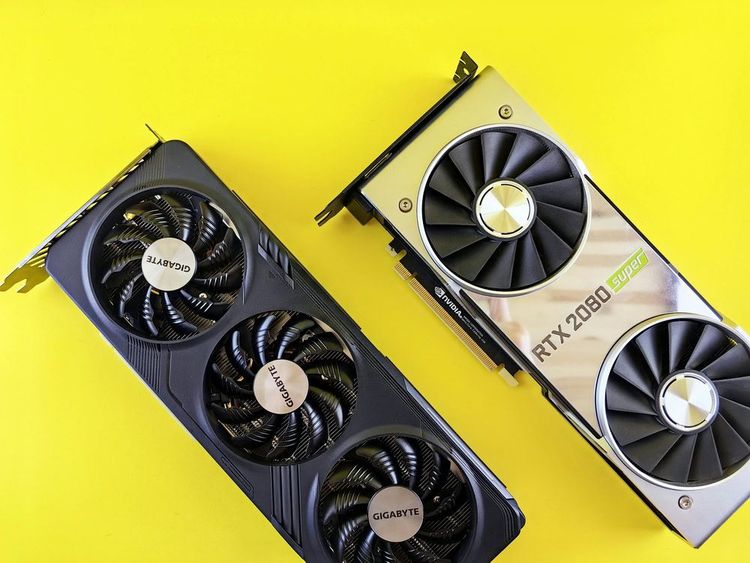
- Gaming Q4 revenue: $3.7B (+47% YoY); Pro Viz: $1.3B (+159% YoY); Auto: $604M (+6% YoY)
- Ongoing supply tightness for advanced GPUs and Gaming; no China data center compute revenue assumed in outlook
A new capex logic for the AI age
NVIDIA’s latest numbers read less like a semiconductor earnings release and more like a balance sheet for a new industrial system. In the fourth quarter of fiscal 2026, the company reported $68 billion in revenue, up 73 per cent year-on-year, with data center sales alone reaching $62 billion. That business, which NVIDIA says has grown nearly thirteenfold since the emergence of ChatGPT, is now the beating heart of a capex cycle the group’s leadership describes in unusually simple terms: “compute equals revenues.”
Colette Kress, chief financial officer, framed the quarter as “another outstanding” period of records: revenue, operating income and free cash flow all hit new highs. Free cash flow reached $35 billion in Q4 and $97 billion for the year, of which $41 billion was returned to shareholders via buybacks and dividends. Yet even those cash returns felt almost incidental next to the rhetoric Jensen Huang, chief executive, used to describe the structural shift underway in his customers’ spending.
In the old world, cloud capex of $300–400 billion funded largely “prerecorded” software, as Huang put it: precompiled code, prewritten content, fixed media. In the new world, token-generating AI systems sit at the centre. The more tokens generated—whether by frontier models such as GPT‑5.3‑Codex or enterprise agents like Anthropic’s Claude Cowork—the more revenue the clouds can book. With hyperscaler and top cloud provider capex expectations for 2026 now “approaching $700 billion,” according to Kress, Huang insisted the constraint is no longer will, but power.
Every data center is “power-constrained,” he said. Architectures that maximise tokens per watt—and therefore dollars per watt—dictate the winners. On NVIDIA’s numbers, its GB300 NVL72 systems deliver up to 50‑fold better performance per watt and 35‑fold lower cost per token than the prior Hopper generation. Inference, not just training, is now driving the financial model of AI infrastructure.
Data center scale, networking muscle, sovereign demand
The details of the quarter underscore how far NVIDIA has travelled from its GPU roots towards vertically integrated “AI factories.”
Data center revenue rose 75 per cent year-on-year and 22 per cent sequentially to $62 billion, propelled by sustained demand for Blackwell and the ramp of Blackwell Ultra. Kress said even Hopper, and much of the six‑year‑old Ampere generation, remain sold out in the cloud.
Networking—once a modest adjunct acquired with Mellanox—is becoming a second pillar. Q4 networking revenue hit $11 billion, more than three and a half times the year‑earlier level. For fiscal 2026, networking generated over $31 billion, more than ten times its contribution in 2021, the year Mellanox was consolidated. The driver is NVLink 72, the scale‑up fabric that turns a rack into a single logical supercomputer, alongside Spectrum‑X Ethernet and InfiniBand for scale‑out and cross–data center integration.
Grace Blackwell systems, which rely heavily on NVLink, accounted for roughly two‑thirds of data center revenue in the quarter. Kress described NVLink scale‑up fabric as “revolutionizing computing” and pointed to new moves such as enabling AWS to integrate NVLink with its custom silicon.
The customer base is broadening, too. Hyperscalers still matter—NVIDIA’s top five cloud providers and hyperscalers represent “a little over 50 per cent” of data center revenue—but growth is coming faster from elsewhere: AI model makers, enterprises, supercomputing installations and, increasingly, governments.
The sovereign AI business, which Huang likens to national investments in electricity grids or the internet, more than tripled year-on-year to over $30 billion in fiscal 2026. Canada, France, the Netherlands, Singapore and the UK were cited as key contributors. Over time, Kress expects sovereign AI to grow at least in line with the broader AI infrastructure market, with spend roughly proportional to GDP.
China remains a wildcard. While “small amounts” of H200 products have been approved by Washington for China‑based customers, NVIDIA has “yet to generate any revenue” from them, and its Q1 outlook assumes no China data center compute contribution. Huang warned that domestic rivals in China, “bolstered by recent IPOs,” could alter the industry’s structure over the long term. He urged US policymakers to ensure America remains “the platform of choice for every commercial business, including those in China.”
Rubin, Vera and the architecture of the next leap
Even as Blackwell ramps, NVIDIA has begun sampling its next platform, Rubin, which Huang and Kress cast as both evolutionary and discontinuous. Announced at CES, Rubin includes six new chips: the Vera CPU, Rubin GPU, NVLink 6 Switch, ConnectX‑9 SuperNIC, BlueField‑4 DPU and Spectrum‑6 Ethernet switch.
The promise is ambitious: train mixture‑of‑experts models with a quarter of the GPUs required today and cut inference token costs by up to 10‑fold versus Blackwell. First Vera Rubin samples went to customers earlier this week, with production shipments still slated for the second half of this year. Rubin’s cable‑free tray design is meant to improve resilience and serviceability at data center scale.
Kress declined to quantify how much Rubin might contribute in its first quarters, emphasising that Blackwell will continue to sell “probably at the same time” Rubin ramps. But she was unambiguous about demand: “We do expect pretty much every single customer to be purchasing Vera Rubin.”
Vera, the CPU at the heart of Rubin, reflects a deliberate divergence from conventional data center processor design. It is the only major data center CPU built around LPDDR5, optimised for bandwidth-heavy, data‑processing workloads that dominate AI pipelines, particularly post-training “tool use” where agents call into CPU‑centric systems. Huang stressed Vera’s single‑thread performance and bandwidth ratio as “off the charts,” targeting phases of AI where Amdahl’s Law brings CPU bottlenecks to the fore.
Behind Rubin and Blackwell sits a research and development budget “approaching $20 billion” a year, and what Huang repeatedly labelled “extreme co‑design” across chips, systems, algorithms and software. NVIDIA’s roll-out cadence—an “entire AI infrastructure every single year,” in his words—is meant to deliver performance and efficiency gains that outpace Moore’s Law and, in so doing, underwrite mid‑70 per cent gross margins.
In Q4, GAAP gross margin reached 75 per cent, with non‑GAAP at 75.2 per cent, marginally higher as Blackwell’s contribution grew. NVIDIA is guiding to roughly 75 per cent gross margin in Q1, with “mid‑70s” expected for the full year, even as a “Vera Rubin transition” looms.
From chatbots to agents and robots
If Blackwell and Rubin are the hardware, it is agentic AI that is fast becoming the organising principle of NVIDIA’s narrative.
Kress pointed to early, tangible returns on generative AI deployments. At Meta, she noted, upgrades to the GEM model yielded a 3.5 per cent increase in ad clicks on Facebook and a more than 1 per cent gain in conversions on Instagram. Those seemingly small percentage moves translate into “meaningful revenue growth” at the scale of Meta’s ad machine. Importantly, they run on the same NVIDIA infrastructure that Meta’s Superintelligence Labs are using to train and deploy frontier “agentic AI” systems. Meta, Huang added, is now “deploying millions of Blackwells and Rubin GPUs” alongside NVIDIA CPUs and Spectrum‑X Ethernet.
Elsewhere in the frontier model world, NVIDIA is deepening its equity and technology ties. It has a long‑running partnership with OpenAI, which recently launched GPT‑5.3‑Codex trained and inferenced on Grace Blackwell NVL72 systems. Huang described Codex as handling “long running tasks that involve research, tool use and complex execution” and said it is already widely used inside NVIDIA. The companies are “close” to a broader partnership agreement.
Anthropic is another core bet. NVIDIA has invested $10 billion in the company, which will train and run its models on Grace Blackwell and Vera Rubin systems. Anthropic’s Claude Cowork platform, Huang argued, has triggered “floodgates for enterprise AI adoption,” with compute demand “skyrocketing” and revenue growing ten‑fold in a year, though severely constrained by capacity.
Beyond software, NVIDIA is leaning hard into “physical AI” — the application of these models to the real world. Automotive revenue in Q4 rose 6 per cent year-on-year to $604 million, a small figure in NVIDIA terms but one the company regards as an early signal. It is pushing Alpamayo, a portfolio of vision‑language‑action models and simulation assets aimed at enabling vehicles “that can think,” with the new Mercedes‑Benz CLA cited as the first production car built on NVIDIA DRIVE featuring Alpamayo.
Robotaxis from the likes of Waymo, Tesla, Uber, WeRide and Zoox are, Huang said, scaling from thousands of vehicles in 2025 to millions “over the next decade,” creating a market “poised to generate hundreds of billions of dollars of revenue.” That build‑out, he argued, will demand “orders of magnitude more compute,” both in training clusters and embedded systems.
Robotics more broadly is being cultivated through NVIDIA Cosmos and Isaac open models and frameworks, already adopted by companies such as Boston Dynamics, Caterpillar, Fanuc‑style industrial players, LG Electronics and NEURA Robotics. Partnerships with Dassault Systèmes, Siemens and Synopsys aim to push Omniverse digital twins and CUDA‑X libraries into the workflows of “millions of researchers, designers and engineers” across industrial sectors.
All of this fits back into the token metaphor. Whether a model is writing code, recommending content, piloting a vehicle or controlling an industrial robot, Huang argues, it is generating tokens that can be monetised—and thus justify expanding compute.
Outside the data center: Gaming and professional markets
The non–data center segments are, by comparison, modest, but still meaningful.
Gaming revenue in Q4 was $3.7 billion, up 47 per cent year-on-year, supported by strong Blackwell demand and better supply. NVIDIA’s RTX platform remains the default for high‑end PC gaming, creative work and developer systems. During the quarter, the company rolled out DLSS 4.5, G‑SYNC Pulsar and claimed up to 35 per cent faster large language model inference across leading AI PC frameworks.
Yet here, the supply story reverses. Kress warned that, while demand and channel inventory appear healthy, “supply constraints” will be a headwind to Gaming in Q1 and beyond. Visibility late in the year is still uncertain enough that NVIDIA stopped short of promising year-on-year gaming growth in fiscal 2027.
Professional Visualization, by contrast, is moving rapidly off a smaller base. Revenue crossed the $1 billion mark for the first time, reaching $1.3 billion in Q4—up 159 per cent year-on-year and 74 per cent sequentially. The launch of the RTX PRO 5000 Blackwell workstation, with 72GB of fast memory aimed at AI developers running large models and agentic workflows, positions this segment as something of a bridge between client and data center.
Tax and expense guidance also showed some evolution. NVIDIA will now include stock-based compensation in its non‑GAAP results, bringing a key cost into clearer view. Q4’s non‑GAAP effective tax rate was 15.4 per cent, helped by a one‑off benefit. For fiscal 2027, the company expects both GAAP and non‑GAAP tax rates to land between 7 and 19 per cent, excluding discrete items and major regulatory shifts.
Non‑GAAP operating expenses in Q1 are expected to be around $7.5 billion, with stock‑based compensation of $1.9 billion. For the year, non‑GAAP operating expenses are projected to grow in the “low 40s” per cent, reflecting heavy investment in what Kress called an “expanding opportunity set.”
Balancing supply, investment and capital return
One of the subtler signals in NVIDIA’s commentary lay in its inventory and purchase commitments. Inventory grew 8 per cent quarter-on-quarter, but purchase commitments “increased significantly,” as the company secured capacity “beyond the next several quarters,” further out than is typical. This reflects what Kress called “longer demand visibility” and a belief that tightness in advanced architectures will persist.
The implication is that while NVIDIA is confident in its ability to ship into calendar 2027, it must underwrite that with upfront commitments all along its supply chain. That, in turn, competes with shareholder cash returns and strategic equity investments in partners such as Anthropic.
On capital deployment, Kress steered away from any suggestion of a step‑change in buybacks, despite the company’s towering free cash generation. She emphasised the need to support suppliers’ capacity and invest in early AI developers on NVIDIA’s platform, describing that as “a very important part of our process.” Share repurchases and dividends will continue, she stressed, but opportunistically rather than via a high‑profile “stake in the ground.”
Huang, for his part, returned repeatedly to ecosystem leverage as a strategic asset. CUDA’s compatibility across generations—Ampere, Hopper, Blackwell, and soon Rubin—means software optimisation work done today benefits the entire installed base. Acquisitions like Mellanox, and now the licensing of Groq’s low‑latency inference technology along with its engineering team, are framed not as diversification but as extensions of the same architecture. Groq’s accelerators, he hinted, will be integrated into NVIDIA’s stack much as Mellanox was, with more detail promised at the upcoming GTC conference.
Outlook: sustained growth, new frontiers
For the first quarter of fiscal 2027, NVIDIA guided to revenue of $78 billion plus or minus 2 per cent, with most growth again driven by data center. Gross margin is expected to hold around 75 per cent, GAAP and non‑GAAP, plus or minus 50 basis points. The company anticipates sequential revenue growth throughout calendar 2026, and—strikingly—expects to surpass the $500 billion Blackwell and Rubin revenue opportunity it outlined only last year.
Longer term, Huang reiterated his belief that total data center capex could reach $3–4 trillion by 2030, implying a further acceleration from even today’s inflated spend. The logic is circular but, in his view, self‑reinforcing: software everywhere will be AI‑driven; AI requires tokens; tokens require compute; and compute, if well architected, directly translates to revenue.
The agentic AI “inflection point” may be the industry’s current obsession, but NVIDIA’s script now adds another chapter: physical AI. As robots, vehicles and industrial systems begin to consume tokens as voraciously as chatbots and coding assistants, the company is betting that its architecture, already orbiting the data center, will extend into factories, streets and even space.
On that last frontier, Huang allowed himself a moment of speculative physics. GPUs are already in orbit—Hopper, he noted, is in space—handling high‑resolution imaging that would be too bandwidth‑intensive to send back to earth unprocessed. Space data centers today have “poor” economics, not least because radiative cooling is heavy and clumsy compared with terrestrial airflow and liquids. But in a world where energy and physical constraints drive architecture decisions as much as data, it is not hard to see why NVIDIA’s leadership is sketching out designs even there.
For now, the more immediate challenge is more prosaic: turning purchase commitments into delivered silicon, and delivered silicon into sustained returns, in a market where every hyperscaler, sovereign and AI model house is recalibrating its view of what counts as “enough” compute.