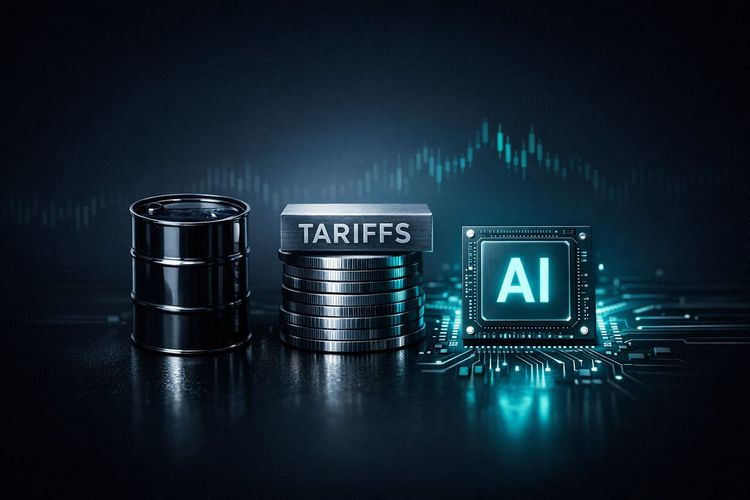





Tariff risk returns
Fresh trade friction is back near the top of investors’ worry list, reviving the old fear that supply chains and margins could again become political variables rather than merely commercial ones. The immediate significance is less the headline itself than the way it darkens the outlook for industrials, consumer goods and globally exposed tech names.
What to watch: Apple is a key read-through for hardware supply chains; transport groups and retailers are also sensitive if tariff rhetoric hardens further.
Oil keeps inflation nerves alive
Energy prices are once again doing what central bankers dislike most: muddying the disinflation story. A sustained move higher in crude would complicate the path for bond yields, while offering support to the cash flows of big oil producers and pressure to fuel-heavy industries.
What to watch: Chevron is a direct beneficiary if crude strength holds, while airlines such as Delta Air Lines face the opposite squeeze through higher jet fuel costs.
AI trade still dominates semis
The semiconductor complex remains the market’s clearest expression of the AI capital-spending boom, and investors are still treating each data-point on demand as a test of whether this theme is durable or overheated. That keeps chip leaders highly influential not just for tech, but for broader index direction.
What to watch: NVIDIA remains the bellwether; any change in order visibility or pricing power would ripple across servers, memory and power-equipment suppliers.
Defense spending supports contractors
Heightened geopolitical strain continues to funnel attention toward defense budgets, creating a supportive backdrop for contractors and related industrial suppliers. For investors, this is one of the clearest examples of macro uncertainty turning into sector-specific earnings visibility.
What to watch: Watch whether higher security spending broadens beyond prime contractors into aerospace supply chains and specialist electronics groups.
Yields remain the hinge for growth stocks
Even when headlines jump between geopolitics, commodities and trade, Treasury yields still act as the market’s central transmission mechanism. If inflation expectations stay sticky, long-duration growth stocks could again face valuation pressure despite resilient earnings narratives.
What to watch: Apple, Tesla and other richly owned growth names are especially sensitive to any renewed rise in real yields.